
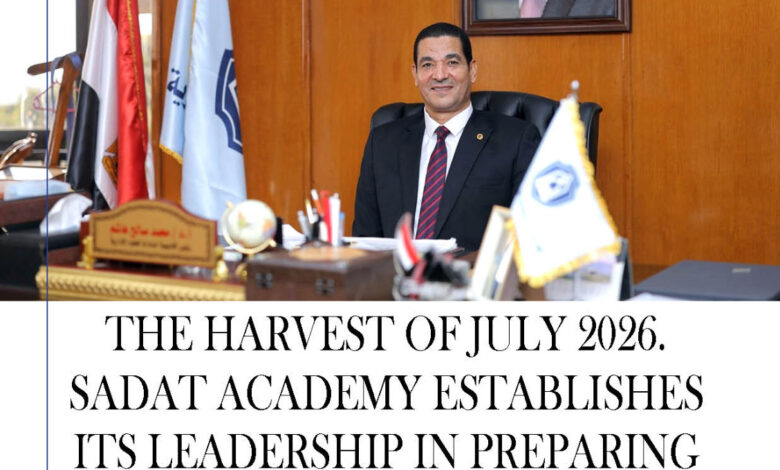
The harvest of July 2026. Sadat Academy establishes its leadership in preparing leaders and developing administrative education
Cairo – Arab Center
During July 2026, the Sadat Academy for Administrative Sciences witnessed intensive activity that reflected its tendency to strengthen its role as one of the most prestigious educational institutions specialized in preparing administrative leaders and building human cadres, by combining the development of the institutional structure, upgrading the educational process, media openness, and consolidating a philosophy based on investing in the human being as the focus of comprehensive development.
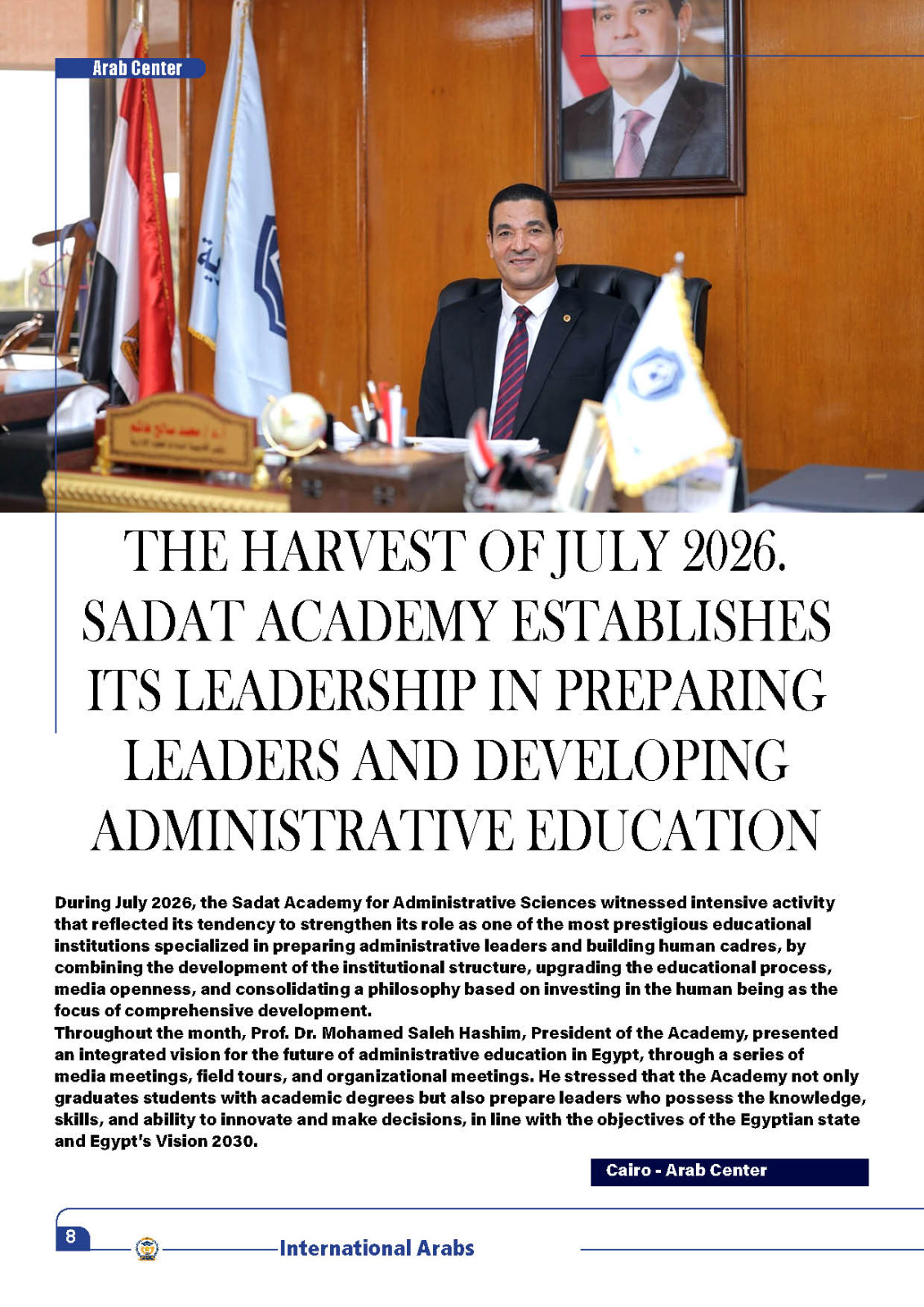
Throughout the month, Prof. Dr. Mohamed Saleh Hashim, President of the Academy, presented an integrated vision for the future of administrative education in Egypt, through a series of media meetings, field tours, and organizational meetings. He stressed that the Academy not only graduates students with academic degrees but also prepare leaders who possess the knowledge, skills, and ability to innovate and make decisions, in line with the objectives of the Egyptian state and Egypt’s Vision 2030.
This movement reflects a new vision of the Academy’s management, based on linking the educational process to the needs of the labor market, developing the university environment, and investing in the human element, in addition to enhancing the Academy’s community presence as a national house of expertise in administrative sciences.
A vision based on building the human being
The file of building the human being and preparing the leaders was strongly present in the statements of the President of the Academy during July, as Dr. Mohammed Saleh Hashim, during his hosting of the program “Here Maspero” on Egyptian television, confirmed that real development starts from the human being, and that building the personality capable of leadership has become a national necessity imposed by regional and international variables.
He explained that leadership is not only an innate talent, but also a skill that can be acquired through education, training, and practical experience, pointing out that a limited percentage of people are born with leadership qualities, while educational institutions can prepare the vast majority of leaders through specialized scientific and training programs.
He pointed out that the family represents the first link in the character industry, followed by the role of the school, the university, places of worship, and civil society institutions, stressing that the success of the state in preparing future leaders depends on the integration of these institutions in instilling the values of belonging, responsibility, discipline, and entrepreneurship.
He stressed that Sadat Academy is working to translate this vision into practical programs which aimed at preparing cadres who possess leadership and management skills. They can deal with the rapid changes that the world is witnessing in the fields of economy, management, and digital transformation.
Teamwork is Management Philosophy Before It’s a Business Style
In an exclusive interview with Egyptian TV, the President of the Academy presented an administrative philosophy based on the fact that teamwork is the real engine of institutional success, explaining that institutions do not achieve their achievements by relying on individual efforts, but rather through the integration of roles, unity of vision, and teamwork.
He stressed that modern universities are required to graduate cadres who believe in the value of cooperation and can work within multidisciplinary teams, pointing out that the Academy is keen to consolidate this culture within its educational and training programs, in line with the needs of the labor market, which has become increasingly dependent on teamwork and participatory management.
He added that investing in human capital is no longer an option but a necessity to achieve sustainable development, which makes the academy put the development of management thought and leadership skills at the top of its priorities.
Digital Transformation and the Making of the Future
The issues of digital transformation and artificial intelligence occupied an important space in the vision of the President of the Academy, who stressed that the technological revolution has reshaped the business, management, and education environment, which forces academic institutions to continuously update their programs.
He explained that universities are no longer institutions for the transfer of knowledge only, but have become partners in their production and the manufacture of the future, by encouraging innovation and entrepreneurship, linking scientific research to the needs of society, and preparing graduates who can compete in local, regional, and international markets.
He pointed out that the Academy is continuously developing its educational programs to keep pace with these changes, with a focus on developing creative thinking skills, analysis, decision-making, and the use of modern technologies in management.
Field tours to support development
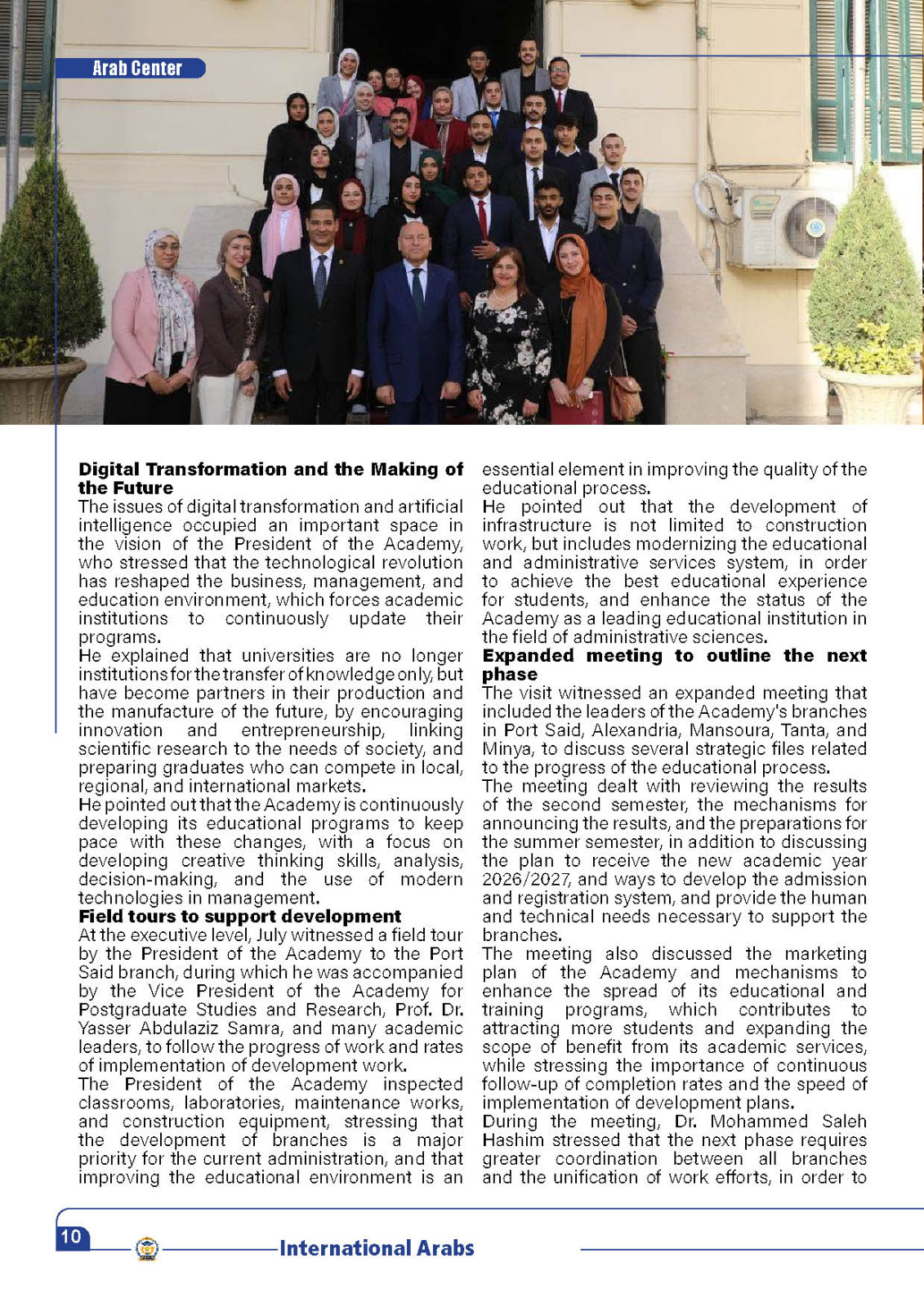
At the executive level, July witnessed a field tour by the President of the Academy to the Port Said branch, during which he was accompanied by the Vice President of the Academy for Postgraduate Studies and Research, Prof. Dr. Yasser Abdulaziz Samra, and many academic leaders, to follow the progress of work and rates of implementation of development work.
The President of the Academy inspected classrooms, laboratories, maintenance works, and construction equipment, stressing that the development of branches is a major priority for the current administration, and that improving the educational environment is an essential element in improving the quality of the educational process.
He pointed out that the development of infrastructure is not limited to construction work, but includes modernizing the educational and administrative services system, in order to achieve the best educational experience for students, and enhance the status of the Academy as a leading educational institution in the field of administrative sciences.
Expanded meeting to outline the next phase
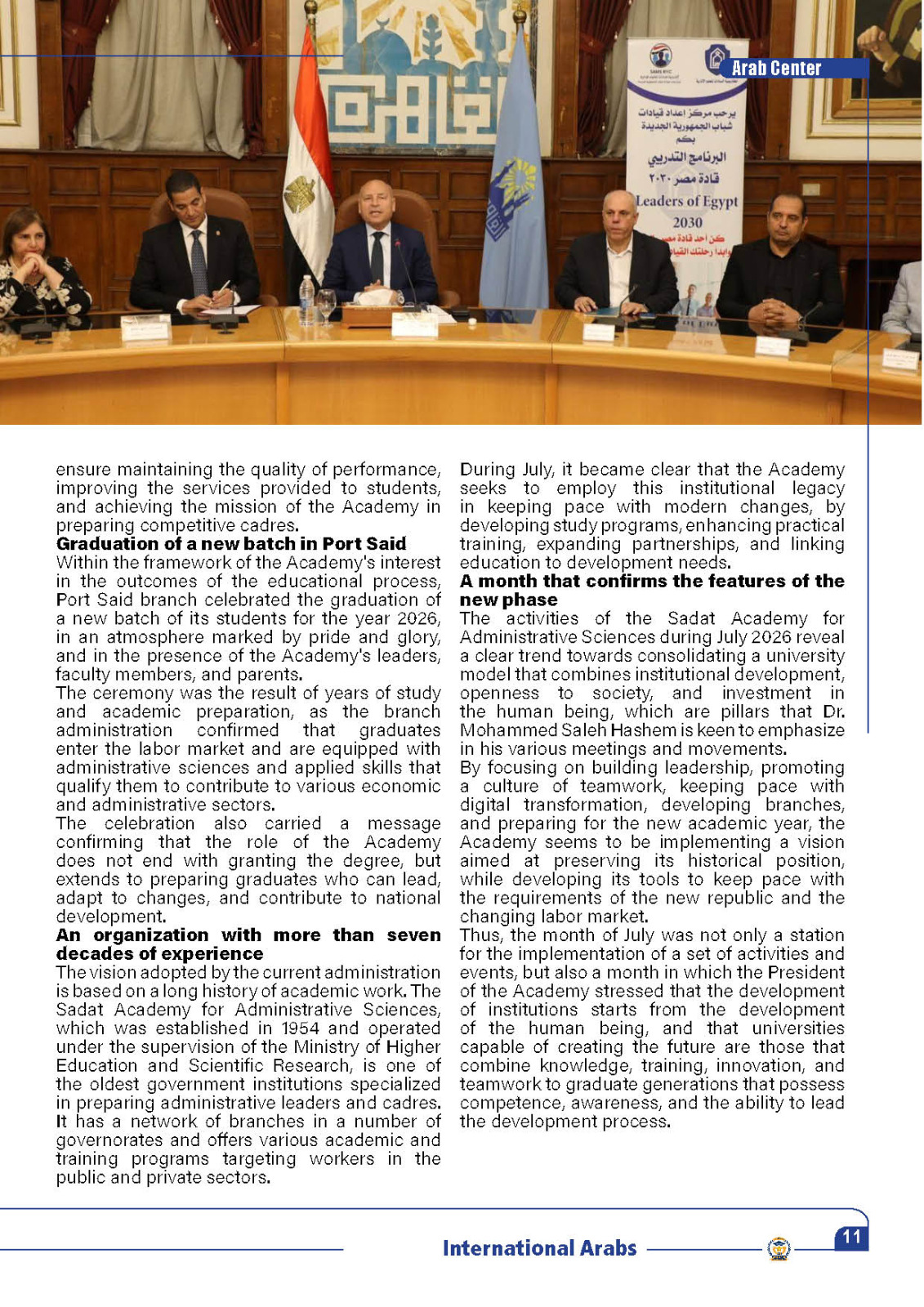
The visit witnessed an expanded meeting that included the leaders of the Academy’s branches in Port Said, Alexandria, Mansoura, Tanta, and Minya, to discuss several strategic files related to the progress of the educational process.
The meeting dealt with reviewing the results of the second semester, the mechanisms for announcing the results, and the preparations for the summer semester, in addition to discussing the plan to receive the new academic year 2026/2027, and ways to develop the admission and registration system, and provide the human and technical needs necessary to support the branches.
The meeting also discussed the marketing plan of the Academy and mechanisms to enhance the spread of its educational and training programs, which contributes to attracting more students and expanding the scope of benefit from its academic services, while stressing the importance of continuous follow-up of completion rates and the speed of implementation of development plans.
During the meeting, Dr. Mohammed Saleh Hashim stressed that the next phase requires greater coordination between all branches and the unification of work efforts, in order to ensure maintaining the quality of performance, improving the services provided to students, and achieving the mission of the Academy in preparing competitive cadres.
Graduation of a new batch in Port Said
Within the framework of the Academy’s interest in the outcomes of the educational process, Port Said branch celebrated the graduation of a new batch of its students for the year 2026, in an atmosphere marked by pride and glory, and in the presence of the Academy’s leaders, faculty members, and parents.
The ceremony was the result of years of study and academic preparation, as the branch administration confirmed that graduates enter the labor market and are equipped with administrative sciences and applied skills that qualify them to contribute to various economic and administrative sectors.
The celebration also carried a message confirming that the role of the Academy does not end with granting the degree, but extends to preparing graduates who can lead, adapt to changes, and contribute to national development.
An organization with more than seven decades of experience
The vision adopted by the current administration is based on a long history of academic work. The Sadat Academy for Administrative Sciences, which was established in 1954 and operated under the supervision of the Ministry of Higher Education and Scientific Research, is one of the oldest government institutions specialized in preparing administrative leaders and cadres. It has a network of branches in a number of governorates and offers various academic and training programs targeting workers in the public and private sectors.
During July, it became clear that the Academy seeks to employ this institutional legacy in keeping pace with modern changes, by developing study programs, enhancing practical training, expanding partnerships, and linking education to development needs.
A month that confirms the features of the new phase
The activities of the Sadat Academy for Administrative Sciences during July 2026 reveal a clear trend towards consolidating a university model that combines institutional development, openness to society, and investment in the human being, which are pillars that Dr. Mohammed Saleh Hashem is keen to emphasize in his various meetings and movements.
By focusing on building leadership, promoting a culture of teamwork, keeping pace with digital transformation, developing branches, and preparing for the new academic year, the Academy seems to be implementing a vision aimed at preserving its historical position, while developing its tools to keep pace with the requirements of the new republic and the changing labor market.
Thus, the month of July was not only a station for the implementation of a set of activities and events, but also a month in which the President of the Academy stressed that the development of institutions starts from the development of the human being, and that universities capable of creating the future are those that combine knowledge, training, innovation, and teamwork to graduate generations that possess competence, awareness, and the ability to lead the development process.